What exactly are stocks and shares?
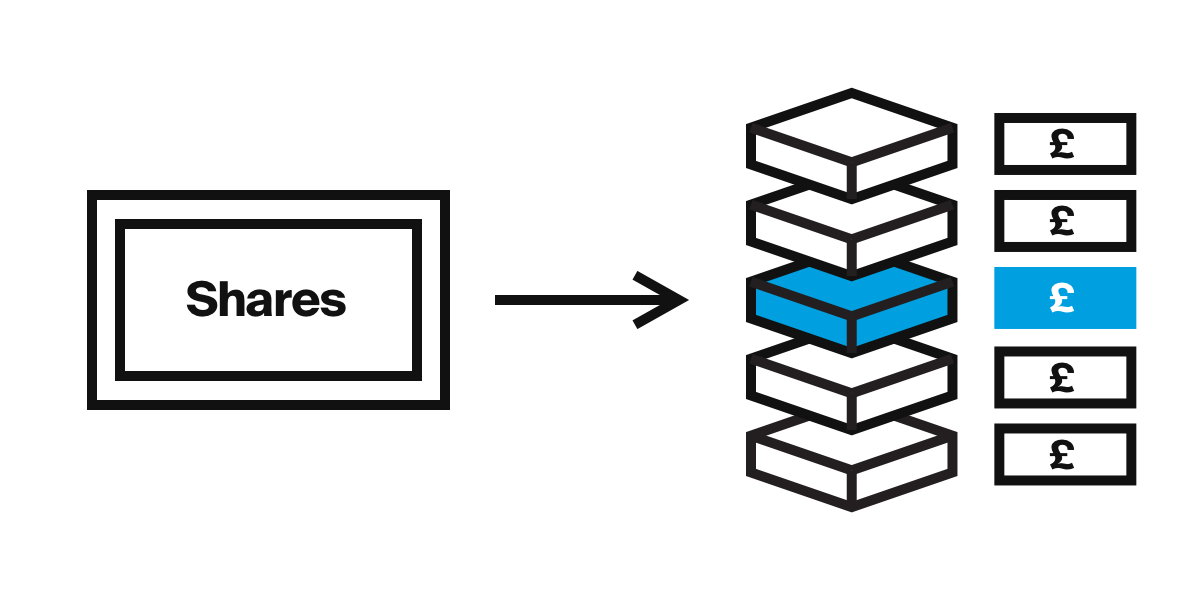
When a company is in need of liquidity, it can take out a loan with the bank. Another option is to issue shares (also known as stocks). You invest your money in a specific company when you buy shares. When a company issues new shares, the company receives the money that you (and other investors) have invested. The buyer of a share is called a shareholder. In exchange for your investment, you become a part-owner of that company. Profits and losses of the company are often reflected in the share. A share is, in fact, nothing more than a (tradable) proof that you own part of the capital of a company.
What determines the price and value of a share?
The price of a share is determined by the last transaction. A transaction can take place when a buyer and seller come to a price agreement. As with many other products, the price is often influenced by the balance between supply and demand. Meaning, the more people want to buy a share, the higher the price will be. The (profit) expectation of the relevant company often plays a key role in this. Is the profit forecast high? Then, the demand will probably rise. The share price can differ every trading day.
Theoretically, earnings are what affect investors' valuation of a company, but there are other indicators that investors use to predict stock price. Remember, it is investors' sentiments, attitudes and expectations that ultimately affect stock prices. Every investor, like yourself, will consider the expected future results of the company. Based on this, you can determine the share value and whether you think the current price is too high, too low or just right. For some information about how to choose your first stock, see this video.
When are shares profitable?
You can earn money with shares in two ways. Firstly, by trading the shares. The price fluctuates due to the aforementioned supply and demand. If you sell a share for a higher price than you bought it for, then you logically make a profit. Of course, this also works the other way. If you sell your share for less than the purchase price, you lose money.
The second way to profit from a share is through dividends. Companies that issue shares can opt for profit distribution in the form of a dividend. When you get dividends, they can be in the form of cash or shares. If a company issues a dividend, it decides the percentage that will be paid out.
Where to buy shares
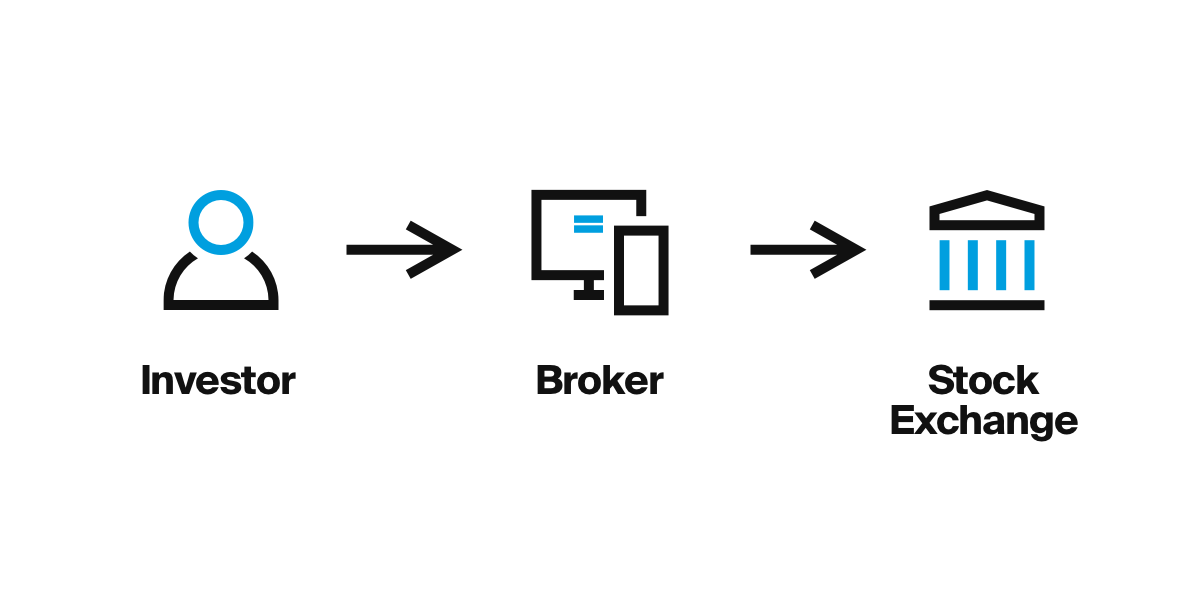
When you place an order with EXDEGIRO to buy or sell a share, your order goes to a stock exchange. This is the place where shares and other financial products are traded. Here, the supply and demand come into effect. Whether your order will be executed depends on orders from other investors trading on the stock market. Some shares can be offered on multiple stock exchanges. For example, Marks & Spencer can be found on both the London Stock Exchange (LSE) and the Börse Frankfurt. To find out how to buy or sell a share and learn more about online share dealing via the EXDEGIRO platform, watch the following video.
Types of shares
Stocks and shares are synonyms and can be used interchangeably. The two main types of shares are common stock and preferred stock.
Common stock
Fittingly, common stocks are more common than preferred stock as the majority of shares for sale are issued in this form. A big difference between common stock and preferred stock is in regards to voting rights. Common stockholders are typically given voting rights for corporate issues, such as electing board members. Therefore, these shareholders have a say in the company’s policies and management. Typically, when you buy one share of stock, you receive one vote.
Preferred stock
In contrast to common stock, shareholders of preferred stock do not get voting rights. However, preferred stock still has its perks. Investors of preferred stock are usually guaranteed a fixed dividend in perpetuity, similar to a bond. Common stockholders can also be paid dividends, but they are usually variable and never guaranteed. Additionally, preferred stockholders come before common stockholders in redeeming their shares if a company goes into liquidation. Therefore, they have a better chance of getting at least some of their money back than common stockholders.
What is a stock fund?
You can choose to buy shares yourself, but it is also possible to buy shares through a stock fund. This is an investment fund that invests in several companies at the same time. This way, your portfolio is automatically diversified and your risk of investment is spread. This video from our Investor’s Academy can tell you more about spreading risk. For you as a private investor, an advantage of investing in a stock fund is the fact that a fund manager maintains the fund. On the other hand, a disadvantage might be the relatively high costs that you pay for the work of the fund manager. ETFs are a similar alternative to equity funds. These are listed funds that follow an index, region or sector. ETFs are traded as like shares on the market. Read more about ETFs here.
The risk of investing in shares
Purchasing shares can be profitable but it is not without risk. We think it is important that you are aware of the risks associated with investing. With shares, for example, the price risk is an important factor. The stock you buy today may be worthless tomorrow. In addition to the exchange rate risk, there is always the chance that a company will go bankrupt. Before you start investing, there are a number of factors important to consider. It helps to determine how much risk you are willing to take and which products suit you best. It is also not advisable to invest money that you may need in the short term or to take positions that could cause financial difficulties. Do you not know what to invest in? This video in our Investor’s Academy might help you start.
Investing in stocks in different market conditions
The stock market can be influenced by several factors, the first one is the economic situation. Usually, economic performance and the stock market are in line. When the economy is growing, consequently the stock market also performs well. Here’s what we can see when the stock market is on the up:
- GDP growth: Companies produce more, grow and expand.
- New share issuance: Companies generate more capital and increase their capitalization.
- Increased stock value: When there are more buyers than sellers of a stock, the price of the share increases, generating more wealth for those who are invested in.
- More confidence: Investors have more confidence in the markets and are more likely to invest.
But what happens when market conditions, on the other hand, are not positive? As we know, the economy is cyclical. Stagnation and recession can alternate with phases of growth. These situations may occur:
- Mistrust: When market conditions are not favorable, investor confidence in markets declines.
- Falling stock prices: Stock prices may fall. For example, if there is an oil crisis, oil-related stocks will inevitably drop in price. This may lead to financing problems for the company.
- Capital invested in stocks: (Investment) companies may hold down on stock investments when they see little potential for growth and decide to hold cash or equivalents instead, generating further downward pressure on prices.
Predicting market conditions is not always easy. However, you can use technical analysis and fundamental analysis to analyse stock price movements. These types of analysis can help you predict new price fluctuations.
Investing in shares: our tips
- Don’t just buy one or several shares. Spread your risk by investing in different types of companies or sectors.
- Don’t invest money that you might need in the short term. Think about the long term when buying shares.
- Select the companies from which you want to buy shares consciously. Research and get to know the company and the market it operates in.
Fun Fact:
The first share in the world was issued in the Netherlands by the Dutch East India Company. With their first emission in 1606, more than 6 million florins were collected, a huge sum at the time.
The information in this article is not written for advisory purposes, nor does it intend to recommend any investments. Investing involves risks. You can lose (a part of) your deposit. We advise you to only invest in financial products that match your knowledge and experience.